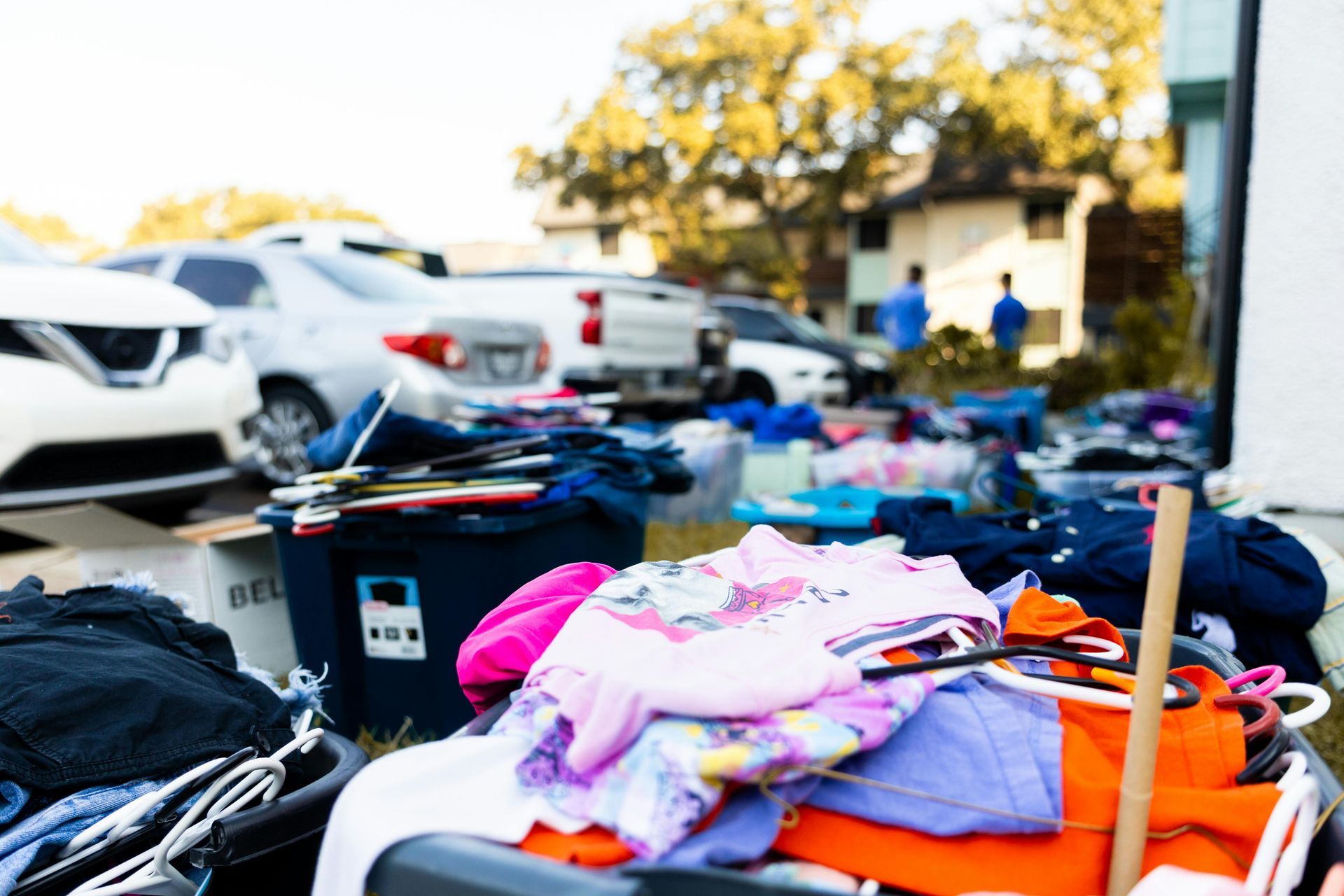
Garage Sale Season: Setting Up to Sell

Main WP • May 3, 2022

Summer is quickly approaching and that means it’s time for garage sales to begin. Now is the perfect time to prepare for a successful garage sale and we hope these tips help you on your way to earning a little extra cash.


Start Early to Skip the Stress


GATHERING INVENTORY


Starting the decluttering process now will give you both inventory to sell and peace of mind. Not sure where to start? We have several articles on our blog here to get you started.

Place similar items in the same pile to save time organizing later.


SET THE DATE

The weekends are considered the best time to hold garage sales. Friday and Saturday from 7 am to 11 am are the peak times that people are out scouting for great bargains. Also, it’s better to plan your sale for the first weekend of the month since most people have more money to shop with.


Consider asking family and neighbors if they are interested in combining their garage sales with yours. This will drive more traffic to your sale as people generally prefer less travel, and larger neighborhood sales will attract more attention.


MAKE DECISIONS AHEAD OF TIME

Someone I look up to once told me that if you make a decision ahead of time, it will save you from a lot of struggle and panic later on. I think this is great advice for many things, including garage sales. Things to consider might be what you will do with items that don’t sell, where you will set up, who will be helping you, and what sort of change you’ll need.


Study the Pros


TREAT YOUR SALE LIKE A BUSINESS


Ever wonder how successful stores make so many sales? A lot has to do with branding, but there is a lot to be said for presentation. Arranging your inventory attractively can do a lot to help your sales. For example, bundle items together. If you are selling clothing, put the items together as an outfit. Not only will people see how the pieces work together, but you are more likely to sell an entire ensemble if it’s all together. If items are dirty or dusty, polish them up to make them more appealing to your customers.


Part of presentation includes where products are placed. People are more willing to buy what’s at eye level, so resist putting smaller items on the ground. Tables are a great way to display items. Have a table reserved for a checkout area, with bags for customers to place their items in once purchased.


In addition, consider selling treats and drinks near your checkout. Grocery stores make a great deal of money on “last-minute” sales, which is why you see so many products in the checkout lanes. And if your sellers have been out and about for a long time, they might want a small pick-me-up before continuing to the next sale.


Selling with the Right Price


PRICE TO MOVE

While it would be so nice to make millions in garage sales, it is not likely that this will happen. Because of this, it’s important to realize that your inventory needs to move or you will not make anything at all.


Of course, this doesn’t mean giving things away for pennies on the dollar, but it could entail selling for 10-20% of the retail price for items in good condition. If you have items that are worth more and you don’t want to lose out on the profit, a garage sale probably won’t be the best market for that item. Realize that the audience of garage sales are usually people looking for fantastic deals and won’t be willing to pay over what the item is worth, so don’t be afraid to lower the price of things just to keep yourself from having to donate the item later.


PRICE AHEAD OF THE SALE

Pricing ahead of time will save you time and money. You won’t be in the awkward situation of trying to come up with a price on the spot – after all, you have more important things to focus on the day of the sale! Make sure your price tags are visible no matter the size of the item. This will also help eliminate confusion and chaos on the day of the sale.


Final Thoughts

A few things to consider:


Don’t place things on hold – even if they are paid for. Too many times items are put on hold and no one comes back for them, so the best way to avoid a future headache is to only make sales to people who come prepared to take the item away at the moment of purchase.


Have a calculator, chair, and pen and paper at hand. Whatever will make the sale run smoothly is worth investing in and these tools are hopefully something you already have in your home.


Finally, be safe. Garage sales invite strangers to your home and safety should still be key. Things like locking your doors, not allowing anyone inside your home that you don’t know, and having multiple people you trust to help you at the sale, can go a long way in helping you have a safe and fun garage sale.


The post Garage Sale Season: Setting Up to Sell appeared first on Towne Storage.


By Towne Storage July 29, 2026
Whether you're moving, downsizing, renovating, storing business inventory, or simply trying to free up more space at home, self-storage offers a convenient solution. One of the most common we get asked is how long customers can leave items in a storage unit. The answer is that it depends. Some items—such as canned foods, bottled water, or over-the-counter medications—have expiration dates and shouldn't be stored indefinitely. But for most household belongings, you can keep them in a storage unit for as long as you rent it. Many people use self-storage for months or even years. The key, though, is preparing your belongings properly so they stay protected over time. Here are seven simple tips to help keep your items in excellent condition for the long haul. 1. Choose the right type of storage unit Starting with the right storage environment is critical and makes all the difference. While many household items do well in a standard unit, temperature-sensitive belongings like wooden furniture, electronics, photographs, important documents, artwork, and musical instruments are often better protected in a climate-controlled unit. And if you’re planning to store heavy items such as appliances, pianos, or furniture, it may be best to choose a ground-floor unit to prevent any damage in transporting items up stairs or further away. 2. Clean everything before storing it Dirt, moisture, and food residue left on belongings like appliances and outdoor equipment can become much bigger problems over time. So before placing anything in storage, clean and thoroughly dry clothing, furniture, appliances, rugs, and other household items. Doing so helps prevent odors, mildew, stains, and unwanted pests while keeping your belongings in better condition for longer. 3. Pack for the long haul  If your belongings may be stored for months or years, it’s a good idea to invest in sturdy boxes, quality packing tape, protective covers, and durable plastic containers whenever possible. It's also wise to avoid overpacking boxes, which can cause them to weaken over time. Clearly labeling every box will make it much easier to find what you need later without unpacking your entire unit. 4. Protect furniture and valuables Large items often spend the longest time in storage, so a little extra protection goes a long way. Cover upholstered furniture with breathable covers, wrap wood furniture to protect its finish, store mattresses in protective bags, and avoid stacking heavy boxes on delicate items. Disassembling larger furniture can also help save space while reducing wear and tear. 5. Leave yourself room to access items Packing every available inch of your unit may seem efficient, but leaving a narrow walkway makes it much easier to retrieve seasonal decorations, business supplies, or other frequently used belongings. Keeping those items near the front of the unit can save even more time. This simple step also helps minimize unnecessary moving and rearranging, reducing the wear and tear that comes from repeatedly shifting boxes and furniture. 6. Check on your belongings occasionally Even if you plan to store items for years, it's a good idea to stop by every few months. A quick visit allows you to make sure boxes remain secure, protective covers are in place, and everything is staying organized and free of any mold or pest issues. It also gives you an opportunity to rotate seasonal items or take home anything you currently need. 7. Choose a storage facility you can trust But long-term storage isn't just about how you pack your belongings—it's also about where you store them. A clean, secure, professionally managed facility like Towne Storage provides added peace of mind that your belongings will remain protected for however long you need them. And with us, there isn't a set limit on how long you can leave items in a storage unit—whether your storage needs last a few months or several years. Best of all, Towne Storage offers clean, secure storage units, flexible month-to-month rentals, and our exclusive 12-Month Rate Lock Guarantee , making it easy to store your belongings with confidence for exactly as long as you need.

By Alicia Aguirre June 12, 2026
A crowded room or messy workspace can create stress even when the items themselves seem harmless. Let’s talk about the mental toll clutter takes on you.