
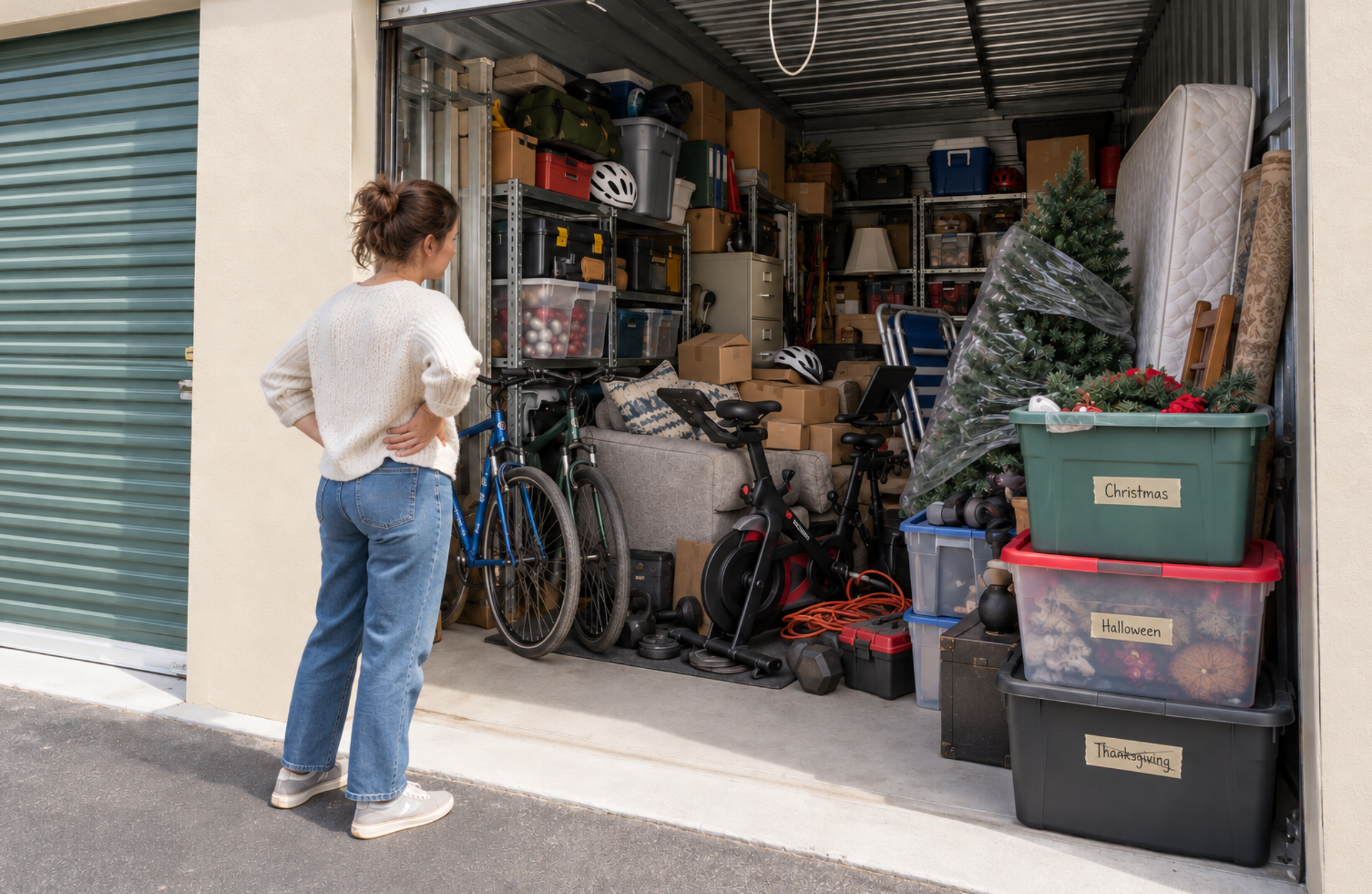
Somewhere behind the Christmas tree box are the Halloween bins. The Thanksgiving centerpieces might be underneath those, and your 4th of July banners and flags are trapped somewhere in the corner. And the wreath you’re looking for? You’ll probably find it right after you’ve bought a replacement. If this sounds familiar to you, you’re not alone. After all, while holiday decorations make our homes feel festive and each season more fun for our kids, keeping an entire year’s worth in a garage, basement, or spare closet can leave our homes feeling overcrowded and cluttered—and turn decorating into a scavenger hunt. Fortunately, a self-storage unit can give all your seasonal decorations a dedicated home while also giving you back some space in yours. With a little organization, it can also make switching from one holiday to the next much easier. Here are seven tips to help you spend less time digging through decorations and more time enjoying them. 1. Give each holiday its own space Start by separating decorations by holiday rather than putting everything into whichever box has room. Keep Halloween props together, Christmas ornaments in their own containers, and Easter decorations, Valentine’s Day heart garlands, and Independence Day bunting in their own separate groups. And for pieces that work across multiple seasons, such as neutral lanterns and vases or autumn greenery, create clearly labeled “shared seasonal décor” bins. Grouping everything this way helps you bring home what you actually need without accidentally hauling a box of Easter eggs into your living room in December. 2. Label for the search you’ll actually make “Christmas” is a start, but “Christmas—tree ornaments” or “Christmas—outdoor lights” is much more useful when you’re looking for something specific. And put labels on both the top and a visible side of each container, so you can find and read them when bins are stacked. You can also number your containers and keep a simple list of their contents on your phone. A quick photo of each bin’s contents, saved with its number, gives you another easy reference when you can’t remember where you packed the mantel garland. 3. Pack decorations according to their shape and fragility Holiday décor comes in everything from tiny glass ornaments to oversized porch displays, so one packing method won’t work for every piece. Use divided containers and individually wrap fragile ornaments. Place wreaths in appropriately sized containers to avoid crushing them, and use a fitted storage bag for an artificial tree or a protective container suited to large lawn decorations. And carefully wind light strands around a reel or sturdy piece of cardboard, while keeping their adapters with them. A few extra minutes now can spare you a tangled mess when it’s time to decorate again. 4. Put everything away clean and completely dry Outdoor decorations often come back inside with dirt, leaves, moisture, or even spiders attached. Before packing them, check for hitchhiking pests, clean the decorations according to their care instructions, and allow them to dry thoroughly. Also wash and dry seasonal linens according to their care instructions, and remove batteries from battery-operated decorations before extended storage to help prevent battery leakage and corrosion from ruining your favorite light-up holiday display. It’s also a good time to set aside broken pieces or decorations you will no longer use. There’s little reason to store something for another year if you already know it won’t make it into next year’s display. 5. Arrange your unit around the calendar Think of your storage unit as a seasonal rotation station. Keep the next holiday’s containers easiest to reach, and leave a clear path to the other groups. After Halloween, for example, return your spooky decorations to their designated spot and bring your Thanksgiving bins forward. Sturdy shelving can help with this and keep smaller containers accessible. Also, put heavier bins lower down, and avoid stacking boxes on fragile decorations. 6. Make each holiday change a planned swap Instead of making separate trips to drop off one season and retrieve the next, plan a single exchange when practical. Take empty containers home with your decorations so you have the right packaging ready when the holiday ends. Then return the packed bins and pick up the next season’s set. Keep a small “decorate first” container or designated space for each holiday, too. Having hooks, tree skirts, or the front-door wreath easy to find lets you get started without opening every box. 7. Choose storage that fits your decorating routine Before reserving a unit for your holiday décor, consider how much space your decorations will actually need. Too often, the Christmas décor we think will fit into three bins ends up needing five. Also check access hours, and ask about unit options suited to your belongings, such as climate-controlled storage , especially for delicate keepsakes or items with specific temperature requirements. And consider what else you might want to store there so you can leave enough room for a separate area for non-décor items. Once you know how big a unit you’ll need and which features matter most, reach out to a Towne Storage on-site manager. Our many convenient locations, flexible month-to-month rentals, and 12-month rate-lock guarantee make it easy and affordable t o create extra room for all your seasonal collections.

Learn what to keep in climate-controlled storage in North Las Vegas, including wood furniture, electronics, and sensitive business inventory.