Storage and Packing Tips
Self Storage Tips
A little planning can make storage easier from the first box to the final trip. Before you move items into your unit, it helps to gather the right supplies, pack boxes carefully, and think through how you want the space arranged. Good storage habits can protect furniture, photos, appliances, clothing, and everyday household items while keeping everything easier to find later. Use these storage and packing tips to make move-in smoother and get more out of your storage space.
Storage Tips
The way you arrange your storage unit matters just as much as how you pack your items. A few simple choices can help prevent damage, save space, and make it easier to reach the belongings you need later. Use these tips before and during move-in to keep your unit organized from the start.
Protect Photos and Paper Items
Old photographs and paper keepsakes can curl or bend over time. Place important photos between two pieces of cardboard to help keep them flat while they are stored. Consider renting a climate-controlled unit so that these items are protected from humidity and extreme temperatures.
Prepare Small Engines Before Storage
Drain gasoline and oil from lawn mowers, trimmers, and other equipment with small engines before placing them in storage. This helps reduce odors, leaks, and safety concerns inside the unit.
Know What Not to Store
Never store perishables, live animals, flammable liquids, explosives, toxic materials, firearms, illicit drugs, or anything prohibited by law or facility rules. If an item is unsafe, illegal, or needs special handling, it does not belong in a storage unit.
Protect Wood and Metal Items
Cover wood furniture and treat surfaces before storing to help reduce scratches and dryness. For metal items, wipe surfaces with a light layer of machine oil to help minimize rust.
Keep Frequently Used Items Near the Front
Place the items you expect to need most often near the front of the unit. This makes quick visits easier and helps you avoid unpacking half the space to find one box.
Leave a Walkway Through the Unit
Create a small aisle down the center of the unit as you load. A walkway gives you better access to boxes, furniture, and seasonal items stored toward the back.
Raise Boxes Off the Floor
Avoid placing boxes directly on concrete floors when possible. Use pallets, shelving, or skids to improve airflow around your items and add a layer of separation from the floor.
Store Furniture to Save Space
Remove table legs and take apart larger furniture pieces when you can. Tabletops, sofas, and other sturdy pieces can often be stored upright to help open up more floor space.
Use Strong Locks and Smart Stacking
Choose a high-quality lock for your storage unit and ask the site manager for a recommendation if needed. When arranging furniture, place sturdy pieces top-to-top when possible so the unit stays organized and space is used efficiently.
Use Tall Containers for Garden Tools
Store shovels, rakes, hoes, and similar tools upright in a trash can or tall container. This keeps long-handled items together and helps prevent them from falling across the unit.
Store Mattresses the Right Way
Cover mattresses before placing them in storage to help keep dust off the surface. Store them flat on a level surface when possible so they keep their shape over time.
Use Wardrobe Boxes for Hanging Items
Pack blankets, draperies, dress clothes, and other hanging items in wardrobe boxes. This helps reduce wrinkles and keeps fabric items more organized while they are stored.
Packing tips
Good packing makes storage easier, safer, and more organized. Before move-in day, gather sturdy boxes, packing materials, tape, labels, and covers so each item has the right protection. The tips below can help you pack boxes, furniture, appliances, clothing, and fragile items in a way that saves space and makes unpacking easier later.
Gather Packing Supplies Early
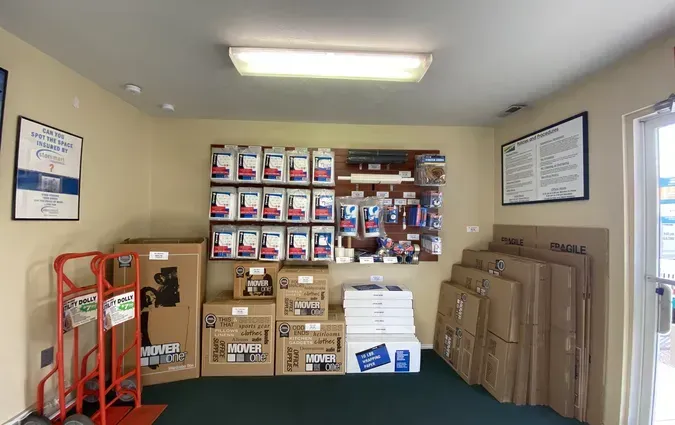
Stock up on sturdy boxes, packing paper, tape, markers, and furniture covers before you start packing. Having the right packing supplies ready helps you pack faster and avoid last-minute trips before move-in day.
Use Covers for Furniture and Mattresses
Cover furniture and mattresses before placing them in storage. For larger pieces like couches, wood furniture, and upholstered items, proper wrapping and spacing can make a big difference, especially when you are trying to store furniture in a storage unit the right way.
Protect Furniture Legs and Frames
Wrap furniture legs, bed rails, and delicate corners before moving them. Keep matching pieces tied or taped together so reassembly is easier later.
Label Every Box Clearly
Label boxes on multiple sides so you can identify them without moving everything around. Mark fragile boxes clearly and keep a simple list of what you packed.
Use Empty Space Wisely
Drawers, dressers, and larger appliances can hold small items like towels, linens, and lightweight belongings. Fill open spaces carefully so items do not shift during the move.
Pack Same-Size Boxes When Possible
Same-size boxes are easier to stack and organize inside a storage unit. Fill each box firmly without overpacking so cartons do not bulge, tip, or collapse.
Keep Heavy Boxes Small
Pack books, tools, and other heavy items in smaller boxes. This makes them easier to carry and helps prevent boxes from breaking under too much weight.
Clean and Dry Appliances
Clean appliances thoroughly and let them dry before storage. Tape doors shut during transport, then leave them slightly open in storage to help prevent odors.
Pack Books Flat
Place books flat inside sturdy boxes to help protect their spines. Use packing paper to fill gaps so books do not shift or bend during transport.
Wrap Dishes and Glassware Carefully
Wrap each dish, glass, and fragile kitchen item separately. Add packing paper to the top and bottom of each box, and place plates on edge for better support.
Use Wardrobe Boxes for Clothing
Hang clothes, draperies, and dress items in wardrobe boxes when possible. This helps reduce wrinkles and keeps fabric items easier to unpack later.
Protect Mirrors, Lamps, and Artwork
Pack lamps, lampshades, mirrors, and framed artwork in separate boxes when possible. Use plenty of padding and mark each box clearly so these items are handled with care.